
Recovery Needs in Your 40s (Or: How a "Quick Paddle" Taught Me a Painful Lesson)
Quick recap, if you're skimming:
I went for what should've been a 90 minute solo paddle, got swept up in the scenery, and ended up out for 3 hours, underfed and no snacks.
I still went to the gym the next morning, it was rough. The day after that was worse.
The real lesson: recovery isn't about pushing through, it's about listening to your body.
6 recovery fundamentals for active women in their 40s: eat enough, hit your protein target, prioritize active recovery, get bodywork, protect your sleep, actively manage stress.
I've been an athlete my whole life, when I was younger I was a competitive athlete. Nowadays, I’m just active and a little obsessed with weightlifting, but the identity never really left. For most of those younger years I ate whatever I wanted, drank as much as I wanted, stayed out late, ran on a few hours of sleep, and while I wasn't exactly thriving, I was rarely injured or in pain.
Now? I pay attention to what I eat, prioritize sleep, don’t drink alcohol, exercise regularly and go to bed feeling great to wake up with a crick in my neck and an SI joint that's decided to riot. "They" — the older folks I grew up around — warned me about turning 40. What they didn't mention was the injury risk of sleeping, or how much recovery time I'd actually need.
This week gave me a hard lesson in getting older.
The Paddle That Got Away From Me
I went for a solo paddle on the Gilbert River out on Sauvie Island. Perfect weather. I'd already worked out that morning, gotten some work done, and headed out around 4:30 to catch high tide because I definitely did not want to get stuck in the mud.
Because I'm on a medication journey with ADHD, my appetite is a little off. I'd skipped lunch and instead opted for protein powder and water, a blueberry pancake, and peanut butter before I headed to the river. I figured that would hold me, no need for snacks, I’d be back in a couple of hours for dinner.
I got to the parking lot feeling great! Hand-pumping my paddleboard in the shade, soaking up the afternoon heat, excited to explore a new area. One thing that caught my attention was how hard it was to pump my board and that I was already feeling a little wiped out. But I was committed, so out on the water I went.
First time on this river, and I can't say enough good things about it! A chill, windy little river, no motorized boats out that day, and great for bird watching, I did mention lesbian in her 40’s, right?! The current was doing most of the work, which made the whole thing feel dreamy. So dreamy that I completely lost track of time. When I finally checked my phone, I'd been paddling with the current, in the opposite direction of my car, for 90 minutes. FFS.
Now it's dinner time, I'm hungry, and I have to paddle back, against the current, for however far I'd drifted. Low blood sugar plus first-time-solo-paddleboarding anxiety made for a hell of a return trip. I did gain some real confidence standing on the board, but that's beside the point. Long story short: I made it back in 90 minutes, which was basically me sprinting with my arms for half of it because I was convinced I was going to die. Low blood sugar and anxiety are not a great combo for rational thinking.
Side note: if this ever happens to you, Dory's "just keep swimming" genuinely helps.
What This Has to Do With Recovery
After a two-hour lifting session, skipping lunch, an oopsy daisy three-hour paddle, feeling nauseous for the remainder of the evening and barely getting dinner down, I still got up and went to the gym the next morning.
I forgot to mention, by the time I got home that night, I was so hungry that I felt nauseous. It was 8 PM, I hadn't had a real lunch, and dinner was making me want to hurl! Hello, 40s.
My coach and I were already adjusting my training because of a cranky shoulder. When I told her about the "accidental 3-hour paddle," she said, "so, rest day?" Obviously I said no, I was already at the gym, and my gym wife and I had accidentally worn matching shirts, so I couldn't exactly leave.
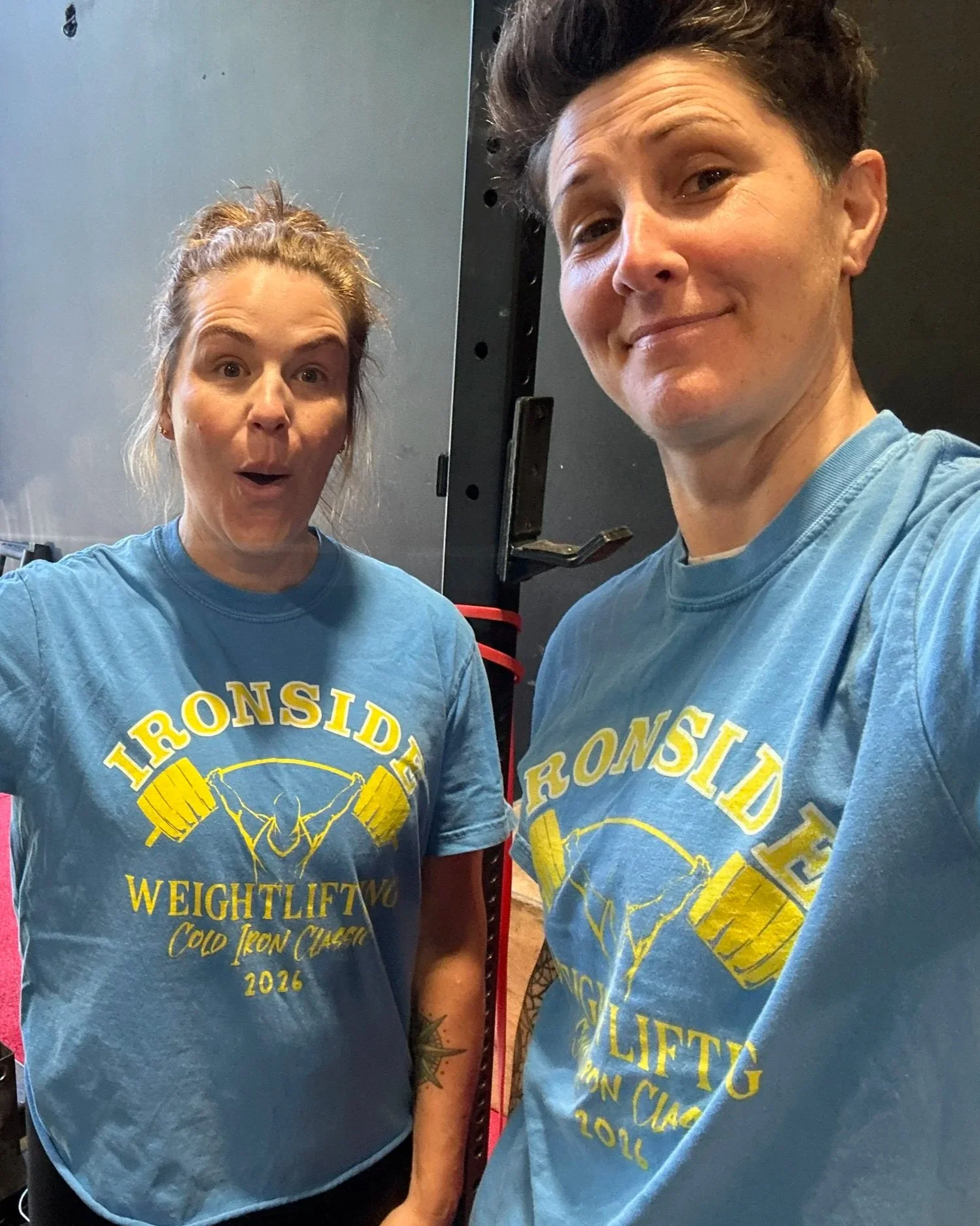
That workout, I was definitely feeling the fatigue. Then I worked all day, still didn't eat enough (still adjusting to the meds), and the next day's workout was even worse! I felt like I was moving through molasses. Or maybe that thick river mud I'd been so afraid of getting stuck in.
Why am I telling you this? Recovery starts with learning to listen to what your body is telling you, instead of bulldozing through it.
I've bulldozed my way through for years, especially as a young athlete. Sprained ankle? Tape it up. Hurt shoulder? You're committed to the race, paddle through it. The result: just keep swimming, just keep swimming.
What I want now is to keep doing the things I love, without ending up exhausted or constantly injured.
Here's what actually helps, from a recovery standpoint.
1. Eat Enough
This matters most to me because I'm a chronic under-eater myself and it's exactly why this is first on the list. What counts as "enough" is specific to your body, your training, your goals, and what you're working toward - this year and five years from now.
In the story above, I skipped lunch. Twice. I normally eat four meals a day, because that’s what it takes to fuel my training and my life. I know that because I ran the numbers, tracked my intake, and figure out exactly what fuels me to support my energy needs, immune system and gut health.
Eating enough throughout the day is how you hit your nutrition targets without needing multiple supplements. The more variety on your plate, the more nutritional bases you cover, and the more efficiently your system runs.
There’s some debate about whether food alone can fully cover this anymore, given declining soil quality but that’s an ADHD rabbit hole for another post.
2. Hit Your Protein Target
This is part of why I eat four meals a day. It's easier to hit my protein numbers and dial in my micronutrients with an extra meal in the mix.
As we age, estrogen declines, and so does our ability to build muscle efficiently. A phenomenon researchers call anabolic resistance, where muscle gets less responsive to both protein and resistance training. There's no single magic number here, but the research points to peri- and post-menopausal women needing somewhere on the higher end of 1.4–2.2 g/kg of protein per day, spread across meals every 3–4 hours rather than loaded into one.(1)
The point isn't the exact number, it's that most of us need more than we think, and more consistently than we're getting it. Some days you'll need more than others.
3. Prioritize Active Recovery
Rest days don't have to mean the couch and three seasons of your favorite show, though if that's what your body's asking for, trust it. A lot of us, especially AFAB folks, are conditioned to always be doing the most.
I'm more the type to ignore the couch days and push through (we all have our struggles). Like this week, still feeling wiped from training and that extended paddle, my plan was to bike from NW Portland to my office in SE. My body had other plans and thanks to rainy weather, I listened and went for a walk instead.
It's easy to get caught up in what the research says or what an influencer recommends, and forget your body already has the answers. It's one of the reasons I love acupuncture, and something I hear from clients constantly: the re-connection between mind, body, and spirit, and the ability to finally hear that quiet internal voice.
Active recovery = non-strenuous, down-regulating movement. For me that's usually walking, a leisurely bike ride, yoga, or mobility work. Things that calm my nervous system and keep my overthinking brain from running the show.
4. Get Bodywork
Show your body some love through someone else's hands, or through heat, water and sound.
One of my favorites: soaking and sauna at Cascada with my wife for a few hours. We joke that she only drives the speed limit after we've soaked long enough (she's a Scorpio, need I say more?).
I also get acupuncture every 4–8 weeks. It's my favorite way to care for my body because it relaxes my nervous system and works on multiple levels at once. Whether it's my digestion, my sleep, an injury, or my brain spinning in circles, acupuncture is the thing my body responds to.
There's a long list beyond that: massage, rolfing, floating, foot soaks, craniosacral work, the list goes on and on. Find what actually works for you, and build yourself a toolbox with more than one option.
5. Protect Your Sleep
Bless every woman in perimenopause! Can we please get a good night's sleep?
Figure out what helps your body actually sleep. It may take a team of providers to get to the bottom of it. It's hard, it's confusing, and it’s infuriating at times!
If you're in your 30s reading this: get your sleep habits dialed in now, before hormone chaos hits. It only gets harder from there.
If you're going to bed and waking with your phone in hand, ask yourself why. No judgment, but be honest about what it's actually doing for you.
Sometimes I want to watch animal videos and send my friends memes for a little dopamine before bed. Other times I'm logging the things I track and sending my gratitude group a last-minute list. I get that it’s hard and it’ll likely never be 100% dialed in. I'm actively working on staring at that little blue rectangle less myself.
For what it's worth, blue light from your phone delays melatonin release and messes with your circadian rhythm. Just one more reason to use it less.(2)
6. Manage Stress, Actively
A lot of the tools above double as stress management, but it needed it’s on section! If you're alive and paying attention right now, stress is part of the deal. Add in relationships, career, and family, and it stacks up fast.
Acupuncture is, by default, one of the best stress relievers I know (assuming needles don't send you into a panic). "I feel so relaxed" is something I hear after almost every session.
If Any of This Sounds Familiar…
If you read this and thought "yep, that's me": the undereating, the pushing through instead of resting, the body that's clearly asking you to slow down while you pretend not to notice, you're exactly who I built my practice for. Doesn't matter if you're actively competing, chasing a PR, or just someone who still thinks of yourself as an athlete even though your last "event" was a dragon boat race a decade ago. That identity doesn't go away just because the competing does, and neither does the body's need for real recovery. This is the stuff I work through with clients every week, and most of us need a second set of eyes on our own patterns (myself included, apparently, given the whole paddleboard situation).
If you want help figuring out your version of eat enough, sleep enough, rest enough, you can book an acupuncture session here. I'd love to help you get there without needing your own ‘near-death’ river saga first.